Many people know they have a cavity but choose to postpone treatment because they are busy, experiencing little discomfort, or hoping the problem will resolve on its own. Unfortunately, cavities do not heal themselves. Tooth decay is a progressive condition that worsens over time, often leading to more extensive and expensive dental procedures if left untreated.
If your dentist has recommended a dental filling, taking prompt action can save you from significant pain, complications, and costs down the road. Understanding what happens when a cavity is ignored can help you make informed decisions about your oral health.
At Pascack Dental Arts, Dr. Guller and his team help patients throughout New Jersey protect their smiles with preventive dentistry, early cavity detection, and modern tooth-colored fillings designed to restore both function and appearance.
What Is a Cavity?
A cavity is a permanently damaged area in the hard surface of a tooth caused by tooth decay. Cavities develop when bacteria in the mouth feed on sugars and carbohydrates, producing acids that gradually erode tooth enamel.
The process typically begins with plaque buildup on the teeth. If plaque is not removed through proper brushing, flossing, and professional dental cleanings, the acids produced by bacteria can weaken the enamel and create small holes in the tooth structure.
Once a cavity forms, it will continue to grow until it is treated by a dental professional.
Why Cavities Never Go Away on Their Own
One of the most common misconceptions in dentistry is that a cavity can heal naturally. While very early enamel demineralization may sometimes be slowed or remineralized with fluoride treatments and improved oral hygiene, a true cavity cannot repair itself.
Once decay creates a hole in the tooth, the damaged structure cannot regenerate. The cavity will continue to expand as bacteria penetrate deeper into the tooth.
Delaying treatment allows decay to spread from the enamel into the softer dentin layer beneath, accelerating the damage and increasing the likelihood of complications.
Stage One: Minor Decay Becomes a Larger Cavity
In the early stages, a cavity may cause little to no discomfort. This lack of symptoms often leads patients to believe treatment can wait.
However, tooth decay continues to progress beneath the surface. What may have required a small filling today could require a much larger restoration in just a few months.
As the cavity grows, patients may begin to notice:
- Sensitivity to cold beverages
- Sensitivity to sweets
- Mild discomfort when chewing
- Visible dark spots on the tooth
- Food becoming trapped in the affected area
At this stage, a simple filling is usually the most conservative and affordable treatment option.
Stage Two: Decay Reaches the Dentin
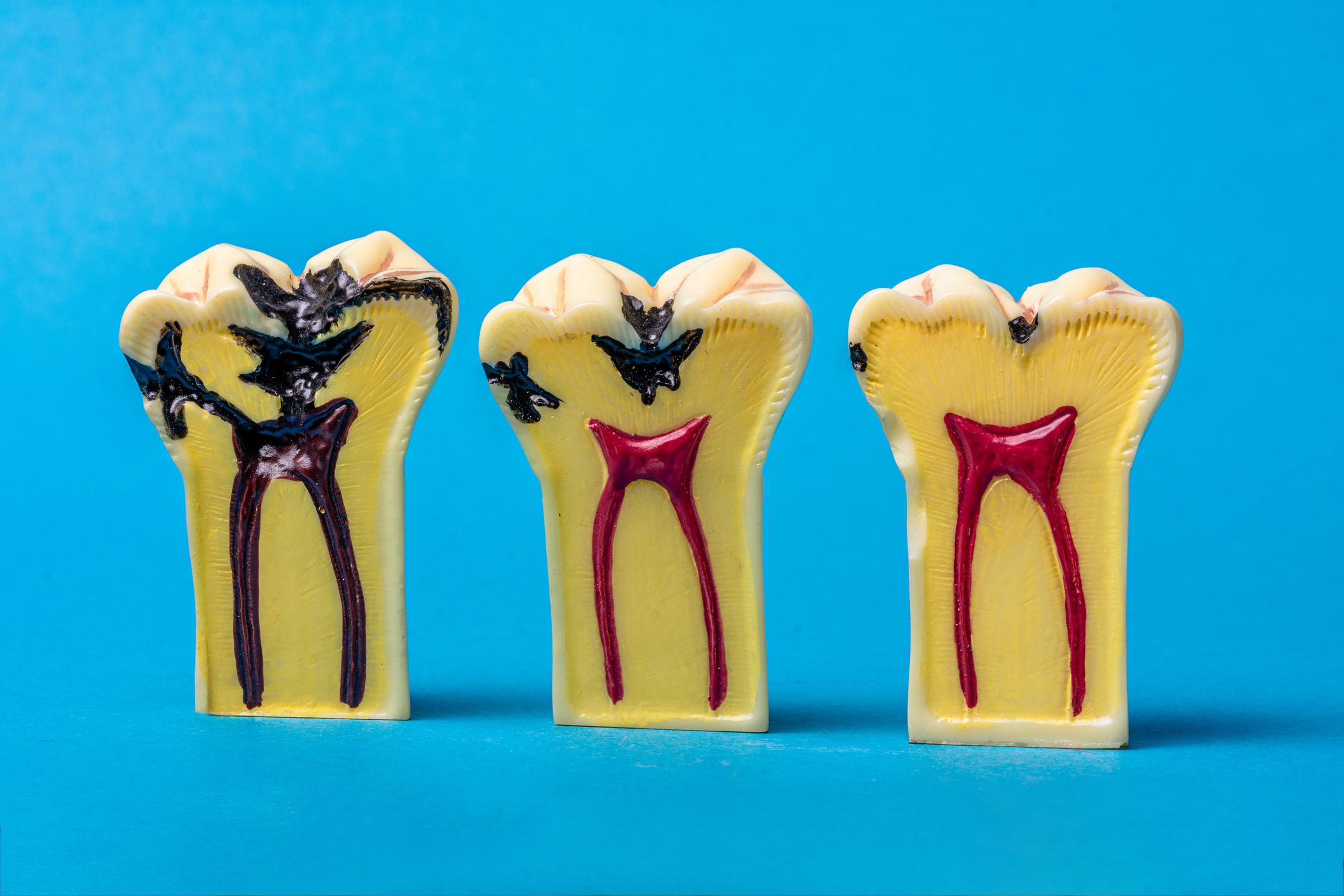
Beneath the enamel lies dentin, a softer layer of tooth structure that contains microscopic tubules connected to the nerve of the tooth.
Once bacteria reach the dentin, decay spreads much more rapidly. Patients often experience increased sensitivity and discomfort because the protective enamel barrier has been compromised.
Common symptoms include:
- Sharp pain when consuming hot or cold foods
- Increased sensitivity to sweet foods
- Discomfort when biting down
- Persistent toothache
At this stage, a larger filling may be necessary. In some cases, a dental crown may be recommended if significant tooth structure has been lost.
Stage Three: Infection Reaches the Tooth Pulp
The pulp is the innermost part of the tooth and contains nerves, blood vessels, and connective tissue. When bacteria penetrate this area, an infection develops.
This stage often results in severe pain and requires more extensive treatment than a simple filling.
Signs of pulp infection may include:
- Persistent throbbing tooth pain
- Severe sensitivity to temperature
- Pain that wakes you up at night
- Swelling around the affected tooth
- Bad taste in the mouth
When infection reaches the pulp, root canal therapy is often required to save the tooth. A dental crown is typically placed afterward to restore strength and function.
Stage Four: Dental Abscess Formation
If an infected tooth remains untreated, bacteria can spread beyond the tooth root and form a dental abscess.
A dental abscess is a pocket of pus caused by bacterial infection. This condition is considered a serious dental emergency and should never be ignored.
Symptoms may include:
- Severe, persistent tooth pain
- Facial swelling
- Swollen gums
- Fever
- Difficulty chewing
- Difficulty swallowing
- Swollen lymph nodes
Without treatment, the infection can spread to surrounding tissues and potentially impact overall health.
The Financial Cost of Delaying Treatment
One of the biggest reasons patients postpone dental care is concern about cost. Ironically, delaying treatment often leads to significantly higher expenses.
Consider the progression:
- Small cavity = simple filling
- Larger cavity = extensive filling or crown
- Pulp infection = root canal and crown
- Severe infection = extraction and tooth replacement
The longer decay progresses, the more complex and costly treatment becomes.
Addressing a cavity early typically requires less time, less discomfort, and fewer financial resources than treating advanced dental disease.
How Untreated Cavities Affect Overall Health
Oral health and overall health are closely connected. An untreated cavity is not merely a dental problem.
Research has shown that oral infections can contribute to systemic health concerns. Chronic dental infections may increase inflammation throughout the body and have been associated with various health conditions.
Untreated dental infections can potentially contribute to:
- Chronic inflammation
- Difficulty eating nutritious foods
- Poor sleep due to dental pain
- Increased stress and discomfort
- Complications for individuals with underlying medical conditions
Protecting your oral health helps support your overall well-being.
What If the Cavity Doesn’t Hurt?
Many patients assume that if a cavity does not hurt, it is not serious. Unfortunately, this is not always true.
Some cavities develop silently for months or even years before causing symptoms. By the time pain occurs, the decay may already be approaching the nerve.
Routine dental examinations and X-rays are essential because they allow dentists to identify cavities before they become painful or require extensive treatment.
Waiting for pain to develop often means waiting until the damage is significantly worse.
The Benefits of Early Cavity Treatment
Treating cavities early provides numerous advantages:
- Preserves more natural tooth structure
- Reduces the risk of infection
- Prevents severe pain and discomfort
- Minimizes treatment costs
- Protects surrounding teeth
- Helps maintain proper chewing function
- Supports long-term oral health
Modern tooth-colored fillings blend naturally with your smile while restoring strength and functionality to damaged teeth.
How Pascack Dental Arts Can Help
At Pascack Dental Arts, Dr. Guller and his experienced dental team are committed to helping patients maintain healthy, beautiful smiles through preventive care and early intervention.
Using advanced diagnostic technology and modern restorative techniques, the practice identifies cavities in their earliest stages and provides durable, natural-looking composite fillings that protect your teeth while preserving aesthetics.
Whether you are experiencing tooth sensitivity, suspect you may have a cavity, or are overdue for a dental examination, the team can help you address problems before they become more serious.
Pascack Dental Arts proudly serves patients throughout Bergen County and surrounding New Jersey communities with comprehensive family, cosmetic, and restorative dentistry.
Delaying treatment for a cavity may seem harmless at first, especially if there is little or no discomfort. However, tooth decay never stops progressing. What begins as a small cavity can quickly evolve into a painful infection requiring root canal therapy, crowns, or even tooth extraction.
The best way to protect your smile, your health, and your wallet is to address cavities as early as possible. Prompt treatment helps preserve natural teeth, prevent complications, and maintain optimal oral health for years to come.
If you suspect you have a cavity or are due for a dental examination, contact Pascack Dental Arts today to schedule an appointment and keep your smile healthy and strong.
Frequently Asked Questions
Question: How long can I wait before getting a cavity filled?
Answer: Every cavity progresses at a different rate, but delaying treatment is never recommended. Even small cavities can worsen quickly and lead to more extensive treatment needs.
Question: Can a cavity heal without a filling?
Answer: Once a true cavity forms and creates a hole in the tooth, it cannot heal on its own. Professional treatment is necessary to stop the decay process.
Question: What happens if a cavity reaches the nerve?
Answer: When decay reaches the tooth pulp, it can cause infection and severe pain. Root canal therapy is often required to save the tooth.
Question: Are tooth-colored fillings durable?
Answer: Yes. Modern composite fillings are strong, durable, and designed to blend naturally with your existing teeth while restoring function.
Question: How can I prevent cavities from developing?
Answer: Regular brushing, flossing, professional dental cleanings, fluoride use, healthy dietary habits, and routine dental examinations are the best ways to prevent cavities.